Showing posts with label november. Show all posts

Sunday, 20 November 2016

Forster's Tern in Essex


For anyone who took up twitching after the early 2000s, Forster's Tern has been a real British blocker. This bird, found yesterday on the Stour Estuary, is the first to linger anywhere in Britain since 2003 - and in fact the last widely twitchable bird was a couple of years further back than that. As such, this bird attracted quite large crowd on a bleak November day.

I've seen two Forster's Terns in Ireland (the regularly returning bird in Co Galway and a first-winter in Co Mayo in February 2014) but it was hard to ignore the temptation of heading up to Mistley this morning for a British tick, particularly given how well the bird was reported to have shown on Saturday afternoon. Eventually it did one close fly-by but in my haste I didn't notice my camera settings were a little awry and the meagre offerings below are about as good as it got for me. Weather conditions and light were absolutely awful and as anyone with a camera will know, photographing a grey bird on a grey background is never particularly easy - particularly as it bombs past at high speed.


Forster's Tern, Mistley, Essex, 20 November 2016

Saturday, 19 November 2016

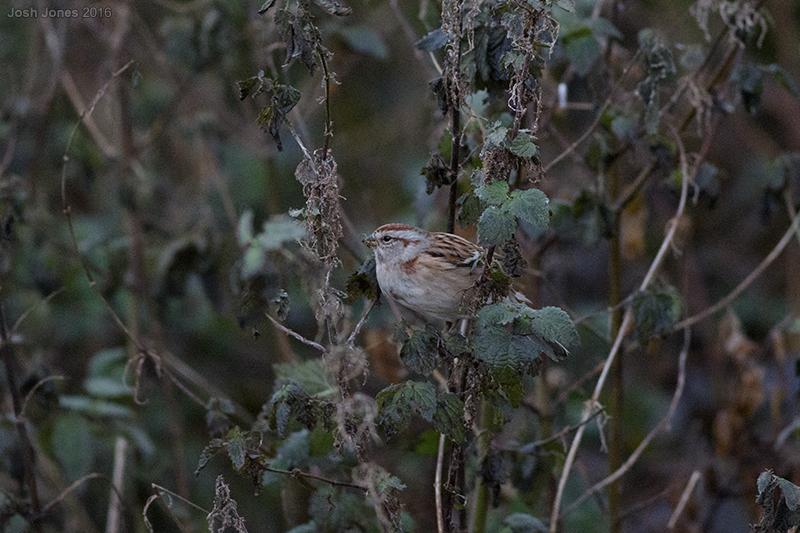
American Tree Sparrow in Sweden

Awful photos (ISO 5,000) of a brilliant bird in near-darkness late on Friday afternoon. Amazingly it did a Friday night bunk and a crowd of 400 (including Brits, Finns and Germans) all dipped. I think just about everyone had assumed that this bird was well settled and many seemed to think it might even stay all winter. It seems I was very lucky!


American Tree Sparrow, Staffanstorp, Sweden, 18 November 2016

Saturday, 5 November 2016

Cliff Swallow

November rarities often come right out the blue, and such was the case with this Cliff Swallow at Minsmere, Suffolk. Found on a miserable Friday afternoon, it was clear that the bird wasn't going far that evening and as such it was with a high degree of confidence that up to 300 or so birders gathered on the reserve at dawn the following morning.

Some, myself included, were duped by a message of it reportedly roosting in reeds by Bittern Hide and spent the first 45 minutes of daylight there. No swallow, but great views of an Otter fishing just in front of the hide as well as a couple of fly-by Bitterns and a spectacular flock of Starlings.

The bird was first seen shortly after seven but proved a bit of a nightmare for the first half hour, almost to the point that we thought we'd dipped given that it had been seen gaining height over South Hide. Happily it came back, settled down and showed very well with up to eight Barn Swallows in bushes just north of the reserve's north wall. At times it was just overhead, though it spent most of the morning sat in hawthorns, presumably warming up, until we left a little while before 08:30.


American Cliff Swallow, Minsmere, Suffolk, 5 November 2016

Wednesday, 11 November 2015

Grip-back Crag

Sunday lunch was fast approaching and the glorious smell of a home-cooked roast had literally just infused my nostrils as the unmistakable sound of a singing Black-billed Cuckoo resonated from my mother's living room. Nonchalantly making for my phone, assuming it would be another feeble excuse for mega-rarity that I'd already seen (what else would be breaking on a quiet, grey Sunday in November?), I was therefore a little surprised to read that the aforementioned mega was actually something I very much did need - and something that I'd missed in the most hilarious of circumstances in April 2014.

I realise that I didn't post anything on my blog at the time so to fill those in who don't use Twitter (where much of the fall-out occurred), essentially I fell asleep reading my book on my bed a short while before David Campbell was picking me up from my flat in Chiswick. I didn't wake up until nearly 08:00 the following morning, by which time David (and everyone else) had got to Flamborough Head and watched the Crag Martin fly off down the headland until it was nothing more than a speck on the horizon. Disorientated, disappointed and feeling downright stupid, it's fair to say I was absolutely seething with the entire episode - particularly as, at that time, it was the most twitchable Crag Martin ever to be seen in Britain and a bird I hadn't anticipated clawing back in a hurry. Surely it would be years before another was so accessible?

Fortunately, that assumption proved to be wrong. Although there wasn't anything I could do about it that afternoon, I arranged to meet Dan Pointon on site early the following morning with the thought that the bird would probably be back around Chesterfield's famous 'crooked spire', which sits like a witch's hat atop the Church of St Mary and All Saints in the centre of town. A number of previous November/December records in Northern Europe have lingered for several days, so hopes were high that this one would do something similar.

And so it proved. The bird was there just after 08:00 the next day, flying round the spire as it had done the previous afternoon. The only problem was that I wasn't - I'd slept in again, ignoring my 05:30 alarm. What a cretin! Fortunately, the martin decided to linger throughout the morning and even had the decency to fly right over my car as I pulled up at 10:15. The weather was miserable, but it gave great views and even briefly landed on the church on a couple of occasions.


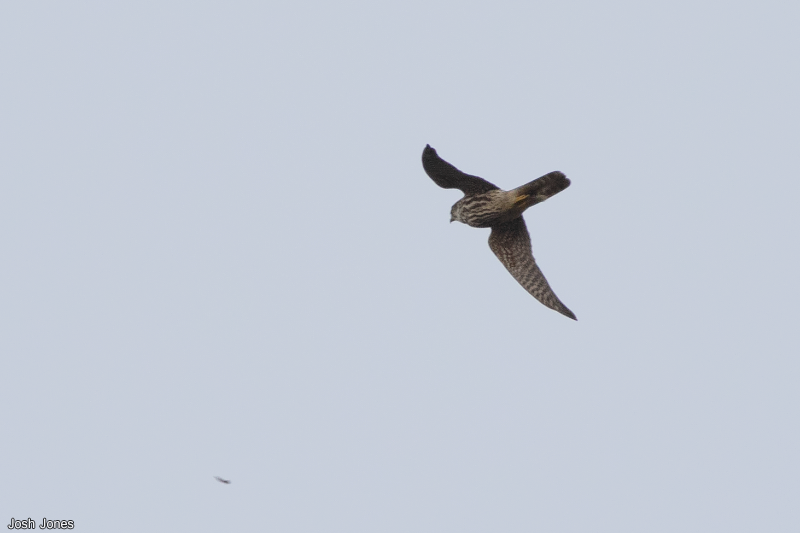
Almost as worthy of the #ThingsYoureUnlikelyToSeeInChesterfield hashtag was a female Merlin that zoomed over shortly after I arrived. I had my camera poised for the martin and had blasted off a few shots without really thinking about what the bird was, only realising the ID when reviewing the photos a little later in the morning!


So on the martin front, all's well that ends well - even if I am a bit of a shit twitcher.

Tuesday, 10 November 2015

Weekend wildfowl

Drake Ring-necked Duck, Startop's End Reservoir, Hertfordshire


Female Long-tailed Duck, Deeping High Bank, Lincolnshire, 7 November 2015

Called in to see the Ring-necked on my way back up to Lincolnshire this weekend - a nice bird nearly back in full breeding plumage, and quite showy to boot (as all the ducks are at this site it seems). The Long-tailed is my third in the Peterborough area following birds in 2004 and 2006 - the latter, which was on my old patch, is apparently also the last area record!

Tuesday, 11 November 2014

Desert Wheatear


Arriving from the second half of October onwards, Desert Wheatears tend to mark the conclusion of the autumn period in Britain. There have already been three this early November, including the extremely tidy male pictured above at Reculver, Kent.

With Sunday free and having not seen a DW in Britain since the female I ticked while dipping Chimney Swift on Holy Island in 2005, I met up with Rich and headed down to Kent for an hour or so in the company of this bird. The light was grey and flat but the bird made up for it, despite the seemingly endless procession of lens wielding admirers parked flat on the beach about ten metres from its favoured rocks. This species has a habit of being pretty fearless and so it proved; though not bothered by humans, it wasn't quite as ridiculous as the Lowestoft bird looked! You'll notice that the DW is facing left in every shot - all thanks to a light but persistent southwesterly.

More wheatear pics on my Flickr pages:


Having had our fill and taken enough photos to add to the ridiculous total already taken by others, we headed down to Dungeness for the afternoon. The best bird was a brief first-winter Yellow-legged Gull but we did speed by a Great White Egret, which was mincing around in the usual corner of ARC Pit.

Brief (shite) Desert Wheatear vid:

Monday, 25 November 2013

Back at the dump

It's approaching that time of year where the days are so short that it rarely seems to get properly light and, to boot, the temperature is abnormally low for so early in the winter season. With a calm day forecast, I decided to seize the opportunity for my first visit to Rainham since the summer, mainly to see what the deal was with tipping activity and where the gull numbers were at.

Gull numbers were fairly low to be honest, though this might be explained by the fact it was a Monday morning. I had 5-10 michahellis of various ages arsing around on the Thames, but no Casps. Bird of the day was a pretty smart 1cy that, to me, can be labelled a Glaucous x Herring Gull:


I'm pretty aware that argentatus can come pretty big and pale - indeed, I see such birds each winter (here's one from Peterborough). However, there's enough to suggest a hybrid in this bird beside its overall paleness:
  • large size and overall bulk (compared to Herring)
  • tertial pattern
  • tail patten: just visible in the bottom photo, a lack of any sort of clear-cut dark band is obvious
  • primary pattern: broad pale chevrons as well as arrow-shaped internal patterning typical of Glaucous Gull (e.g. here and here)

Tuesday, 12 November 2013

Sunday in Lisbon

First-winter American Purple Gallinule, Monsanto, Lisbon, 10th November

A somewhat uneventful Friday was gradually slipping by without incident until mid-afternoon, when I opened up my Facebook to see that David Monticelli had casually posted a crippling back-of-camera head shot of an American Purple Gallinule from Monsanto, Lisbon! Spluttering my mouthful of tea all over the table, I logged straight on to Skyscanner to check flight prices. Sunday was my only realistic option, and the prices looked good, so I spoke briefly with Rich Bonser and we decided to see if the bird was still there in the morning before booking anything. Later that evening, Rich called to say that he was going on the Saturday as Sunday's flight prices rocketed. I checked myself, and my heart sank - after an expensive autumn, a £500 day return was far too much to bother with, so I left things as they were and forgot about it for the time being.

Next morning, and Rich had text to say the bird was still present and looking well. Another check of Skyscanner for alternatives and it appeared that I could fly out Sunday, returning early Monday for a very reasonable price, and so I booked up late afternoon. David M had very kindly offered to stay in Lisbon an extra night to chauffeur us to the bird, and so I met up with him, Ernie Davies and Christian Leth (who'd flown in from Copenhagen) at Lisbon airport at around 09:30. Within an hour we were watching the gallinule, which was blogging around on the small pond at Parque Florestal de Monsanto. Unfortunately it was relatively distant and soon caught a frog - which it quickly demolished - before retiring to a patch of juncus to rest.


Here it stayed for much of the day, often looking pretty ill. In fact, it would let you approach to within a metre - at which range it was pretty clear that it was frightfully thin. It generally stood with its wings drooped, and we started to get pretty worried that the bird might not last the day. Frustrating for those among us with lenses, but more critically a grim state of affairs for the bird. Fortunately though, it did pick up again in the evening and began to feed/hunt. By this time, the sunlight had left the pond and my photographs aren't anywhere near as good as those taken by others.


After walking closer it was, at one point, feeding on seeds (and hunting frogs) less than a metre away from us! Much too close for a 400mm lens, so I put it aside and started filming with my iPhone! Even without bright sunlight enhancing the bird's colours, the close views allowed for intricate study. Purple, royal blue, cyan, green, yellow and even orange are present within millimetres of each other:


With the sun starting to sink, we left the bird at the pond's edge, seemingly in a better state than we had first feared. Alas it appears this was false hope for the bird was found exhausted and taken in to care on Monday. Though we all hope for a positive outcome, I'd hazard a guess that it's gone past the point of no return. A real shame, as it was a genuine stunner.


Huge thanks to David for hanging around in Lisbon and making it a great day, rounded off with a nice meal and a few beers in the centre of town.

Saturday, 9 November 2013

Grey Phalarope

Grey Phalarope, Salthouse Little Eye, 8th November 2013

I've not actually seen many showy Grey Phalaropes, so a couple of hours spent with this smart first-winter at Salthouse on Friday morning was most welcome. It spent most of the time in the middle of the pool (c.30m range) but occasionally looped by just a few metres away. The weak late autumn sunshine meant the bird was generally side-lit, so pristine photos were difficult to obtain. Considering this, I'm quite pleased with my results.


Monday, 19 November 2012

1cy Caspian Gull


This first-winter Caspian Gull showed well on the River Thames foreshore late morning until flushed by loud youths on bikes. A further two birds - both adults - were seen on the tip in addition to 15 or so Yellow-legged Gulls.

Note that, in contrast to some messages that have been broadcast, the majority of gulls are NOT at or by the stone barges. I've encountered three independent lost birders on my last two visits to the site. The best place to see gulls is by walking east along the riverside footpath for 300m from Coldharbour Lane. Birds commute between the tip and the River Thames here, and good views can be had of birds either bathing on the river or on the foreshore itself.

Saturday, 17 November 2012

Down in the dump

For the first time in a while, I managed to spend the morning at Rainham Tip. Despite a wet forecast, it actually turned out to be an OKish morning weather-wise and, despite the relatively low numbers present, the gulls also produced a few decent bits.

Arriving a little after 08:30, I had a Water Pipit flying around near the stone barges as I made my way along the riverside footpath to the tipping area. This was soon followed by the first Caspian Gull of the morning: a heavy-looking first-winter with really nice scapulars and coverts and a distinct dark smudge behind the eye, which really emphasised the white eyelids.


Over the next few hours, I was joined by a few others including David Bradnum. It wasn't the most dynamic of mornings on the tip with hundreds (rather than thousands) of large gulls, although we did have a further two Casps - a green-ringed second-winter (ring covered in sh*t and thus unreadable) that was a bit retarded on the upperparts and seemed to lack a mirror on p10, and a really smart adult picked up by Dave.


Another Rock/Water Pipit also flew over calling and there were plenty of the expected winter species along the Thames including about a dozen Yellow-legged Gulls (of all ages) throughout the morning. This Rook also showed well on the fence adjacent to where we were stood...


Sunday, 11 November 2012

Hooded Merganser


A bird with a crazy profile. Famous last words perhaps, but this one 'feels' so much better than the adult female in Kent back in March. Even if it shows to 20m, it's no tamer than the Wigeon, Teal and Dark-bellied Brents that frequent the same channel. Nice to get out on a glorious day of weather - as at least one other has said, this could be one of the highlights of an often frustrating autumn...