Showing posts with label september. Show all posts
Friday, 30 September 2016
September ends with a couple of Caspian Gulls
There are still good numbers of gulls visiting Dogsthorpe Tip, on the outskirts of Peterborough, at the moment, and the pit within the tip complex offers pretty good views of bathing and loafing birds. I called in briefly today and had two Caspian Gulls, an adult and a first-winter. Fortunately the adult was one of the closest birds! Also present today was a single first-winter Yellow-legged Gull among around 1,000 large gulls.
Labels:
caspian,
dogsthorpe,
gull,
peterborough,
september
Saturday, 17 September 2016
First tip visit of the season
A Saturday morning spent at Pitsea produced a fairly meagre scattering of gulls - a little disappointing after Rich Bonser had visited over the two previous Saturdays and enjoyed excellent numbers, including several Caspian Gulls. Highlights were limited to a tame fox, the returning leucistic Great Black-backed Gull (and, incidentally, its normal-looking sibling for its first time at this site) and 10+ Yellow-legged Gulls. With tipping activity at a minimum, we'd called it a day by late morning.
A couple of adult Yellow-legged Gulls among the detritus - quite amusing how well camouflaged they can be
Yellow-legged Gulls of various ages
'Big White' the Norwegian Great Black-backed Gull - back again!
A surprisingly smart Red Fox - you tend to see really mangled individuals here
Friday, 9 October 2015
Reflecting on Shetland
Though it was my first time on Shetland, I haven't come back feeling particularly put out after eight fairly challenging days. Despite conditions being sub-optimal at best our team still managed to unearth a decent selection of scarce between us: Arctic and Blyth's Reed warblers, Bluethroat, Nightingale, Common Rosefinch and four Barred Warblers. A decent result and reward for the effort put in by the team, particularly Dan and Guernsey Dave who were unrelenting!
There's no denying that working the iris beds, gardens and fields all day is tiring but in my mind the challenge doesn't compare to that in the Azores, where steep slopes, subtropical forest and dense scrub dominate. Therefore the next person to suggest birding on Corvo is easy will feel the full force of my wrath! :-)
The good thing about Shetland (unlike the Azores) is that there is always something to look at in late September. Common migrants - particularly the endearing Yellow-browed Warblers - keep you going, even during the slowest periods. Their presence encourages you to keep plugging away - if they're there, then theoretically something much rarer could be too. Early in the week it seemed that just about every garden with sycamores had this species, though they were sometimes found in the burns and in weedy areas, too. I had a ringed bird at Easter Quarff on our penultimate day, which I only realised when reviewing photos.
Here's a selection of other pics taken throughout the week.
There's no denying that working the iris beds, gardens and fields all day is tiring but in my mind the challenge doesn't compare to that in the Azores, where steep slopes, subtropical forest and dense scrub dominate. Therefore the next person to suggest birding on Corvo is easy will feel the full force of my wrath! :-)
The good thing about Shetland (unlike the Azores) is that there is always something to look at in late September. Common migrants - particularly the endearing Yellow-browed Warblers - keep you going, even during the slowest periods. Their presence encourages you to keep plugging away - if they're there, then theoretically something much rarer could be too. Early in the week it seemed that just about every garden with sycamores had this species, though they were sometimes found in the burns and in weedy areas, too. I had a ringed bird at Easter Quarff on our penultimate day, which I only realised when reviewing photos.
Here's a selection of other pics taken throughout the week.
Olive-backed Pipit, Lerwick, 3 October
Red-breasted Flycatcher, Bigton, 3 October
Bluethroat, Quendale, 4 October
Tuesday, 22 September 2015
Dungeness Empidonax
A wet and windy afternoon at Dungeness watching a generally elusive Empidonax flycatcher - a truly stunning find for Martin Casemore that took everyone by surprise.
As always with these things, identification is some way from straightforward. General consensus seems to favour Acadian (E virescens) but, like the Blakeney Point Alder Flycatcher of 2010, different images seem to suggest different things. Compared to the Blakeney bird, the Dungeness Empid seems more green (rather than olive-grey) above, not too dissimilar to the upperpart colouration of e.g. Yellow-browed Warbler. Below it is somewhat yellower and, crucially, the bill is quite long and gives a downturned impression in some images thanks to a slightly hooked upper mandible (compared to straight/almost upturned in the Blakeney Alder). The dull light seems to inhibit these yellow tones showing so beware some photos where it looks greyer (and more Alder-like!) - just look at my shots below. At this point in time, Alder(/Willow) is considered to have been ruled out and the main emphasis of today's discussion, both across the internet and on site, referred to separating Yellow-bellied and Acadian, though a range of features seem to rule out the former.
A nice bird but one of those that, once the stress and adrenaline of the twitch subsides, you wish you'd spent a bit more time watching and had a bit more knowledge about at the time. That said, the weather was bloody grim this afternoon and I've had a nasty bout of flu since returning from Ireland on Sunday evening, so probably best not to have spent several hours in the wet.
As always with these things, identification is some way from straightforward. General consensus seems to favour Acadian (E virescens) but, like the Blakeney Point Alder Flycatcher of 2010, different images seem to suggest different things. Compared to the Blakeney bird, the Dungeness Empid seems more green (rather than olive-grey) above, not too dissimilar to the upperpart colouration of e.g. Yellow-browed Warbler. Below it is somewhat yellower and, crucially, the bill is quite long and gives a downturned impression in some images thanks to a slightly hooked upper mandible (compared to straight/almost upturned in the Blakeney Alder). The dull light seems to inhibit these yellow tones showing so beware some photos where it looks greyer (and more Alder-like!) - just look at my shots below. At this point in time, Alder(/Willow) is considered to have been ruled out and the main emphasis of today's discussion, both across the internet and on site, referred to separating Yellow-bellied and Acadian, though a range of features seem to rule out the former.
A nice bird but one of those that, once the stress and adrenaline of the twitch subsides, you wish you'd spent a bit more time watching and had a bit more knowledge about at the time. That said, the weather was bloody grim this afternoon and I've had a nasty bout of flu since returning from Ireland on Sunday evening, so probably best not to have spent several hours in the wet.
Presumed Acadian Flycatcher, Dungeness, Kent, 22 September 2015
Monday, 21 September 2015
Back out on Achill
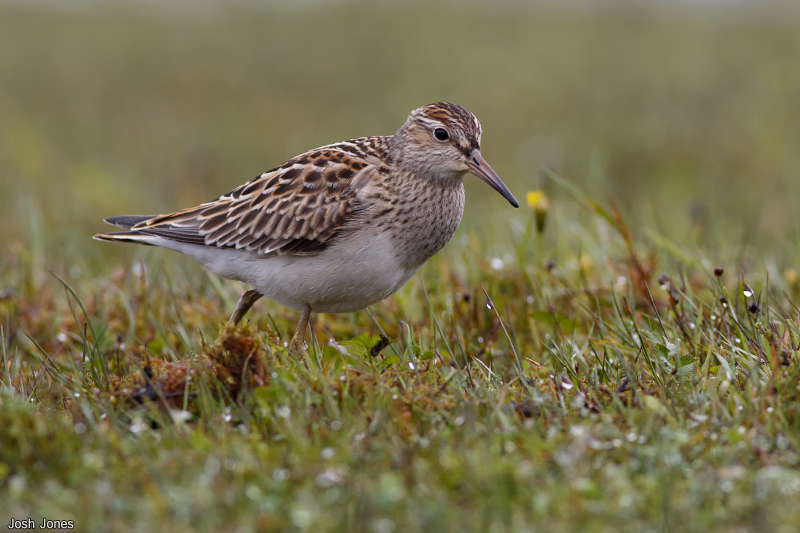
I spent the weekend with Rich Bonser out on Achill Island, Co Mayo - my first autumn visit here for three years. Overall it proved a quiet weekend and thus we were pretty pleased to find a juvenile Pectoral Sandpiper along the north shore of Lough Nambrack mid-morning on Sunday.
I first visited Achill back in September 2008 and left greatly impressed with the island, despite seeing little more than a trio of Curlew Sandpipers. September visits in 2010, 2011 and 2012 were all fruitful, the middle year being truly brilliant. While our fleeting visit this year was far from vintage, a lack of any meaningful weather and a general dearth of Nearctic shorebirds throughout Ireland meant that a Pec arguably wasn't all that bad a result.
In fact it was probably the best Pec I've ever seen. Although it was occasionally spooked by nearby Meadow Pipits, it was utterly fearless when on its own. You could lie on the lough shore and it would just meander its way by. Sometimes it passed less than a metre away, and you could actually hear the water splashing as it pattered by - just brilliant.
Juvenile Pectoral Sandpiper, Achill Island, 20 September 2015
Tuesday, 15 September 2015
Glorious East Yorkshire
The previous weekend in Dorset had showcased a general paucity of migrants, but this weekend was altogether more rewarding. Following a promising forecast mid-week, Dan Pointon and I eventually decided to base ourselves at Spurn from Friday to Sunday as it was looking promising for a potential fall on the Saturday.
As it transpired the fall didn't happen and Friday actually proved the best day for new arrivals. A Barred Warbler proved typically elusive as it crashed about in hawthorns in the first paddock at Sammy's Point while an Ortolan eventually showed quite well in the evening sun at Middle Camp, very late in the day. The latter is only the second I've seen in the UK following a showy bird near Holyhead back in September 2008, so it was a nice bonus.
Each day we carefully scoured large parts of the Spurn recording area as well as spots around Easington, just to the north. The most prominent migrant seemed to be Common Redstart, with Friday and Saturday both producing totals in excess of 30 birds. In terms of numbers, Whinchats and Pied Flycatchers weren't far behind while Tree Pipits were noted regularly, both grounded and flying over. Singles of Common Swift were nice on Friday (Kilnsea) and Saturday (Point). A single Fieldfare at Kilnsea on Saturday was my earliest ever.
There have been some great counts of Mediterranean Gull in the Kilnsea area lately and they were seen anywhere that there were other gulls - particularly large concentrations were seen in fields north of Kilnsea and at Sammy's Point.
Saturday proved miserable at first but it brightened up considerably throughout the afternoon. Ash Howe and James Shergold had joined us and we ambled down to the point in leisurely fashion, finding a good scattering of common migrants along the way. At the point itself the lingering juvenile Red-backed Shrike was bombing around and there were pleasing numbers of Redstarts, Pied Flycatchers, Whinchats and phylloscs.
Sunday morning dawned calmed and a juvenile Marsh Harrier flew south over the Warren early on. Our only Reed Warbler of the weekend was in the hedge opposite the Blue Bell and Ash found a moribund Guillemot on the Humber opposite the Crown and Anchor - unfortunately the latter seemed to have an infection which had blinded it in its right eye. We also enjoyed some nice views of a Yellow-browed Warbler found the previous day in the churchyard before departing Spurn.
The reason for our slightly premature leave was the continuing presence of an Icterine Warbler up the coast at Buckton (and another fresh in at Flamborough) - a potential new bird for James and an opportunity for me to see one properly after staring a singing movement in a bush for a number of hours at Spurn one sunny June afternoon, several years back. On the way we called in to see the Black Stork at Sunk Island, which was happily feeding in its favoured fields.
The drive up to Bridlington was tediously slow as always. Arriving at Flamborough we found out that the Icky there hadn't been seen since early doors and so we drove round to Buckton. A timely text from Dave Aitken alerted us that he and Mark Thomas had literally just re-trapped the Icky and so we hot-footed it down there to see see it in the hand. Very nice it was too, although I was equally as impressed with the dell and Heligoland set-up that Mark and others have worked hard to create here over the past decade. Envy doesn't cover it!
As it transpired the fall didn't happen and Friday actually proved the best day for new arrivals. A Barred Warbler proved typically elusive as it crashed about in hawthorns in the first paddock at Sammy's Point while an Ortolan eventually showed quite well in the evening sun at Middle Camp, very late in the day. The latter is only the second I've seen in the UK following a showy bird near Holyhead back in September 2008, so it was a nice bonus.
Heavily cropped record shot of the Ortolan at Middle Camp,
Pied Flycatcher at Sammy's Point
There have been some great counts of Mediterranean Gull in the Kilnsea area lately and they were seen anywhere that there were other gulls - particularly large concentrations were seen in fields north of Kilnsea and at Sammy's Point.
3cy Mediterranean Gull on the Humber at Kilnsea
Sunday morning dawned calmed and a juvenile Marsh Harrier flew south over the Warren early on. Our only Reed Warbler of the weekend was in the hedge opposite the Blue Bell and Ash found a moribund Guillemot on the Humber opposite the Crown and Anchor - unfortunately the latter seemed to have an infection which had blinded it in its right eye. We also enjoyed some nice views of a Yellow-browed Warbler found the previous day in the churchyard before departing Spurn.
Guillemot looking fairly unhappy about being rescued
The reason for our slightly premature leave was the continuing presence of an Icterine Warbler up the coast at Buckton (and another fresh in at Flamborough) - a potential new bird for James and an opportunity for me to see one properly after staring a singing movement in a bush for a number of hours at Spurn one sunny June afternoon, several years back. On the way we called in to see the Black Stork at Sunk Island, which was happily feeding in its favoured fields.
The drive up to Bridlington was tediously slow as always. Arriving at Flamborough we found out that the Icky there hadn't been seen since early doors and so we drove round to Buckton. A timely text from Dave Aitken alerted us that he and Mark Thomas had literally just re-trapped the Icky and so we hot-footed it down there to see see it in the hand. Very nice it was too, although I was equally as impressed with the dell and Heligoland set-up that Mark and others have worked hard to create here over the past decade. Envy doesn't cover it!
Icterine Warbler in the hand at Buckton, 13 September 2015
Thursday, 20 November 2014
Peru album on Flickr
I've put a bunch of Peru photos on my Flickr page.
Along with a small party of journalists and tour operators, I was fortunate to participate in an eight-day trip to Northern Peru in mid-September, hosted by PromPeru and Green Tours (www.greentours.com.pe). The seven days spent birding was far too little to appreciate this incredibly diverse region fully and I intend to return in the not-too-distant future. I couldn't recommend the place enough, and Wilson Diaz (of Green Tours) did a fabulous job of organising our birding.
A couple of photos, lifted straight from Flickr. Head to my page for more:
Along with a small party of journalists and tour operators, I was fortunate to participate in an eight-day trip to Northern Peru in mid-September, hosted by PromPeru and Green Tours (www.greentours.com.pe). The seven days spent birding was far too little to appreciate this incredibly diverse region fully and I intend to return in the not-too-distant future. I couldn't recommend the place enough, and Wilson Diaz (of Green Tours) did a fabulous job of organising our birding.
A couple of photos, lifted straight from Flickr. Head to my page for more:
A full report of my trip will appear in Birdwatch magazine in the not-too-distant future, and likely on the BirdGuides website too.
Sunday, 2 September 2012
More on Azorean Gulls, I'm afraid
Went back to Rainham yesterday morning. Not as many birds around as on my two previous visits, so could only manage around 25 Yellow-legged Gulls (no Casps). After a few hours of seeing relatively little, I flirted with the idea of heading back home to bed but, on my final scan of the Thames, I spotted the Azorean-type floating aimlessly upriver towards me.
Over the next couple of hours, I only had reasonable views of it on the river and over my head as it flew back towards the tip; it proved frustratingly difficult to locate on the landfill itself, only on view for a minute or two at the most! Here are some shots, including comparisons with both Herring and Lesser Black-backed.
Quite interesting to see how it has changed in appearance. The dark subterminal markings on the bill have intensified in the onset of winter plumage, and the amount head streaking has also increased. The secondaries and tail are in heavy moult; note how the outer tail feathers (that had quite a lot of black left in them back on 21st) have been dropped, leaving a rather messing looking beast. The immature underwing coverts have also been moulted through to white, adult-like feathers since 21st.
It looks pretty decent. Moult timing seems spot on. Primaries look fine. But something just bugs me, and as such I'm still unconvinced. I'd like to see it out of the water for longer and at closer range to get a real feel for structure and jizz though.
To compare moult/plumage, here are a couple of photographs of 'real' Azorean Gulls, taken in the archipelago this week by Rich Bonser. The similarities in moult of the tail and secondaries is striking.
Over the next couple of hours, I only had reasonable views of it on the river and over my head as it flew back towards the tip; it proved frustratingly difficult to locate on the landfill itself, only on view for a minute or two at the most! Here are some shots, including comparisons with both Herring and Lesser Black-backed.
Quite interesting to see how it has changed in appearance. The dark subterminal markings on the bill have intensified in the onset of winter plumage, and the amount head streaking has also increased. The secondaries and tail are in heavy moult; note how the outer tail feathers (that had quite a lot of black left in them back on 21st) have been dropped, leaving a rather messing looking beast. The immature underwing coverts have also been moulted through to white, adult-like feathers since 21st.
It looks pretty decent. Moult timing seems spot on. Primaries look fine. But something just bugs me, and as such I'm still unconvinced. I'd like to see it out of the water for longer and at closer range to get a real feel for structure and jizz though.
To compare moult/plumage, here are a couple of photographs of 'real' Azorean Gulls, taken in the archipelago this week by Rich Bonser. The similarities in moult of the tail and secondaries is striking.
Location:
Coldharbour Ln, Rainham, London RM13, UK
Subscribe to:
Posts (Atom)