Thursday, 17 January 2013

Bearded Tits in Hyde Park

Yesterday, I took advantage of the morning off work and what seemed like the first blue skies for an age to visit Hyde Park, where Inner London's first Bearded Tits had been present for a few days. I knew they'd been showing well, but wasn't prepared for quite how well that meant! Spent an enjoyable couple of hours getting used to my new SLR and lens in a range of lighting conditions from quite overcast to bright sunlight. I'm quite pleased with the results; it's interesting to see how the conditions affected the colour of the images.

You can click on any of the below to make them in to frame-fillers.


Tuesday, 8 January 2013

Reflections on 2012

Twenty-twelve was an interesting year. 'Interesting' is perhaps a feeble adjective to use, but I ended up learning a heck of a lot (not just birds, but life in general), enjoyed some highs but also endured frustrating lows while moving to London in the process. Trying not to make this in to some sort of egocentric autobiography of my personal achievements in 2012, I thought I'd sum the year up with a few photographs and some brief text.

In early January, a series of pretty grim winter storms battered the north and west. Acting on a whim, I hopped over to Ireland for a long weekend (alone) and found the birding to be pretty dynamic - I arrived in conjunction with the first big dump of Iceland Gulls and was fortunate to find a Todd's Canada Goose on The Mullet (Mayo). It was this trip that gave me my biggest low of the year, though - the moment I really regret most. Observing a distant, dark Kumlien's-type Gull among Hooded Crows in fields at Lower Lough MacNean as the light was beginning to fade, I considered Thayer's but decided the bird as on the pale side (you can read a full summary here) and regretfully left it alone as there was no way of getting any closer. Later in the month, the same bird relocated to nearby Enniskillen Dump and afforded better views, where it became clear it was a much more convincing candidate for thayeri. It was therefore nice to be able to head to Lincolnshire in April and appreciate fully what I was looking at. I'm also looking forward to seeing a few more Thayer's in California this February and gaining some experience with the taxon.

Todd's Canada Goose, Belmullet, January 2012

I enjoyed a few great trips abroad this year - Egypt in April...
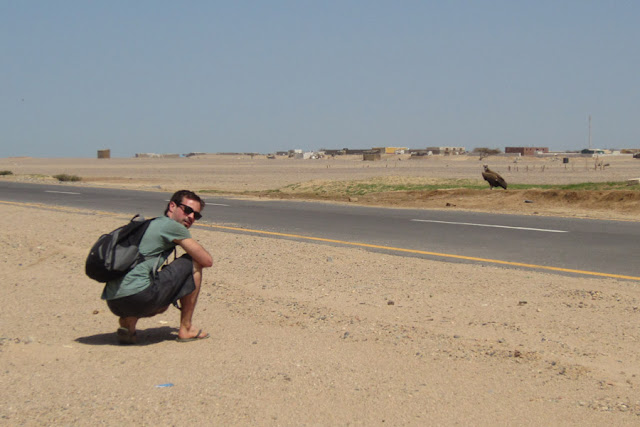
In Shalatein with a Lappet-faced Vulture.

... Morocco in June/July and then my second autumn on Corvo in October. The Northern Parula below was my best find on the latter trip, although overall highlight was the Western Palearctic's second Golden-winged Warbler - it was a true privilege to have been there that day. I also had a great weekend in Estonia in December, seeing the Fox Sparrow as well as my first Black Woodpecker.

Northern Parula, Corvo, © Eric Didner

Golden-winged Warbler, Corvo, © Vincent Legrand

This Bonaparte's Gull was my best British find of the year, even if it was retrospective. Although Rich and I joked that it looked like a different bird at the time, neither of us would have ever believed two Bonaparte's would have been at Cross Ness (London) at the same time - something that, the following day, proved to be true!

Bonaparte's Gull, London, May 2012

All-round birding experience of 2012 goes to a juvenile American Golden Plover found by Rich on one our September trips to Ireland. The bird had clearly arrived that morning and gave some unforgettable views. For me, there is little better than enjoying a good-looking rarity in stunning scenery alongside next to no-one. Achill otherwise failed to replicate its exceptional form of September 2011.

American Golden Plover, Co. Mayo, September 2012

Thanks to everyone that I met, spent time and travelled with in 2012. I'm hoping to get out in the field a bit more in 2013, but that hasn't started well - my year list is currently about 15 (including a Blackcap, the current highlight).

Saturday, 22 December 2012

Apocalypse Gulls


Gulls galore at Tanholt

No sign of the end of the world in Peterborough yesterday. There were, however, a lot of large gulls. I remember moaning quite extensively about the demise of Peterborough gulling as the tips appeared to be closing. Not the case, it seems! The new cell at Tanholt is attracting thousands of birds, and I estimated as many as 5,000 large (mostly Herring) in the area both yesterday and today.

Yesterday was great. Got things under way with a first-winter Caspian Gull among at least 1,000 large gulls in fields on the south side of Dogsthorpe Tip - a welcome return to birds loafing here, where they give really good views. Despite searching, couldn't find much else here.


For the first time in a good few years, large numbers of gulls are also using the fields either side of Willow Hall Lane - no doubt because the new landfill cell at Tanholt lies adjacent. Soon picked up a massive juvenile Glaucous Gull in one of the closest flocks - presumably one of the two seen here earlier in the week (the other was an adult). This is quite clearly a different juvenile to that I had at Dogsthorpe in November.


There were yet more gulls on the tip and pits at Tanholt itself. Scanning the birds around the new pit, a smart second-winter Iceland Gull soon appeared from among the Herrings on the banks at the far side. Shortly after, the birds spooked and I lost the Iceland in the melee although had a really smart adult Caspian Gull in flight and later in the field opposite, which was a nice way to end the session.


Had a couple of hours spare this afternoon, but couldn't locate any white-winged gulls. A second-winter Yellow-legged Gull was a surprise on the new pit at Tanholt but I didn't register anything else significant. Still thousands of gulls in the fields at Willow Hall Lane after 15:30 approached - I figured that they must be roosting on the Nene Washes rather than at CEGB Reservoir, so didn't bother going over there for dusk.

The past 24 hours have forced me to eat humble pie - this is Peterborough gulling at its best, made more ridiculous by the fact no one checks the flocks regularly. It seems really dynamic at the moment with lots of turnover and lots of northern gulls. What worries me is that a Slaty-backed or something similar will inevitably slip through the net here.

Wednesday, 12 December 2012

Hornemann's Arctic Redpoll

Didn't anticipate that we'd get another chance at an accessible mainland bird so soon after the Norfolk individual. And what a bird - it really has to be seen in the flesh to be appreciated. Big size, stunning plumage and unbelievably tame - I had it to 1.5 metres at times. The call is striking too; a kind of slurred 'chuup' almost like a Bullfinch or a Snow Bunting.

Great day out with James Lowen. A speculative stop at Copdock also saw us pull out 45+ Waxwings there.

Click on the shots below for bigger, better versions in lightbox.


Sunday, 9 December 2012

Estonian twitch


Fox Sparrow site, Haapsalu sewage works

Had a great day in Estonia yesterday with Rich, Ernie D and Lee G. Flew to Helsinki on Friday evening and, after a few hours' kip in the car, caught the 07:30 ferry over to Tallinn yesterday morning. We were mightily impressed by how smooth the drive was west to Haapsalu - the roads (and the tyres!) are great.

Arriving at Haapsalu a little after 11:00, it didn't take long for the Fox Sparrow to show on the seeded area just northeast of the sewage works. Viewing was really quite restricted and the light was also low which made obtaining decent photographs a challenge. I was pretty pleased with the handheld digiscoped shots below given high ISO and low shutter speed! A juvenile Goshawk sat in a tree behind the sewage works was a welcome distraction, while several Fieldfares and a couple of Jays were also noted.


Moving round to nearby Vonnu Park at around 14:00, the highlight here consisted of respectable flight views of a Black Woodpecker as it flopped lazily across the lake area. Other bits around the park included several trumpeting Northern Bullfinches, a couple of white-breasted Nuthatches, Great Spotted Woodpeckers and a flock of 30 cracking Mealy Redpolls.


Days are short around the Baltic at this time of year and, with the light quickly fading, our limited birding time was already drawing to an end. We decided to head back to Tallinn, and spent an enjoyable few hours wandering round the old town, taking in the Christmas market, a couple of local ales and a tasty meal of Estonian sausage and mash.

Later in the evening, we took the last ferry of the night back across to Helsinki, sleeping all the way. A few more hours' kip in Helsinki airport proved the final act of the trip prior to an early flight back to London this morning - after landing at Heathrow at 09:15, I was back home for 10:30. Remarkable what you can squeeze in to a weekend!

Sunday, 2 December 2012

Rainham on Saturday


This perfect adult Caspian Gull was one of three on the tip at Rainham on Saturday morning - the others being 1cy and 3cy birds. It is quite a bright-billed and dark-mantled individual, and the pale eye can also been seen in the bottom image. My first Waxwing of the winter also dropped in a couple of times as we watched the tip.


Monday, 19 November 2012

1cy Caspian Gull


This first-winter Caspian Gull showed well on the River Thames foreshore late morning until flushed by loud youths on bikes. A further two birds - both adults - were seen on the tip in addition to 15 or so Yellow-legged Gulls.

Note that, in contrast to some messages that have been broadcast, the majority of gulls are NOT at or by the stone barges. I've encountered three independent lost birders on my last two visits to the site. The best place to see gulls is by walking east along the riverside footpath for 300m from Coldharbour Lane. Birds commute between the tip and the River Thames here, and good views can be had of birds either bathing on the river or on the foreshore itself.

Saturday, 17 November 2012

Down in the dump

For the first time in a while, I managed to spend the morning at Rainham Tip. Despite a wet forecast, it actually turned out to be an OKish morning weather-wise and, despite the relatively low numbers present, the gulls also produced a few decent bits.

Arriving a little after 08:30, I had a Water Pipit flying around near the stone barges as I made my way along the riverside footpath to the tipping area. This was soon followed by the first Caspian Gull of the morning: a heavy-looking first-winter with really nice scapulars and coverts and a distinct dark smudge behind the eye, which really emphasised the white eyelids.


Over the next few hours, I was joined by a few others including David Bradnum. It wasn't the most dynamic of mornings on the tip with hundreds (rather than thousands) of large gulls, although we did have a further two Casps - a green-ringed second-winter (ring covered in sh*t and thus unreadable) that was a bit retarded on the upperparts and seemed to lack a mirror on p10, and a really smart adult picked up by Dave.


Another Rock/Water Pipit also flew over calling and there were plenty of the expected winter species along the Thames including about a dozen Yellow-legged Gulls (of all ages) throughout the morning. This Rook also showed well on the fence adjacent to where we were stood...


Sunday, 11 November 2012

Hooded Merganser


A bird with a crazy profile. Famous last words perhaps, but this one 'feels' so much better than the adult female in Kent back in March. Even if it shows to 20m, it's no tamer than the Wigeon, Teal and Dark-bellied Brents that frequent the same channel. Nice to get out on a glorious day of weather - as at least one other has said, this could be one of the highlights of an often frustrating autumn...

Saturday, 10 November 2012

Red-breasted Goose

Through bleary eyes and with a bit of a duff head, I rolled out of bed at 06:30 this morning and drove down to Pagham. On arrival there at around 08:45, Alan Lewis informed me that the Hooded Merganser hadn't been seen and he was heading off to Farlington to look for the Red-breasted Goose. With the drizzle continuing, I decided against wasting time stood on the North Wall and decided to follow suite and head west.

The weather had improved a tad on arrival at Farlington and, although overcast, it had stopped raining and was actually reasonably mild. Alan and I walked around to the east side of the reserve and soon located the Red-breasted Goose showing with around 150 Dark-bellied Brents in fields by the sea wall.

Unfortunately, I'd forgotten to put my camera in my bag on leaving London this morning, and thus it wasn't surprising to find the goose performing outrageously well. I did have my iPhone, though, and the shots below were taken via hand-held 'iPhoneScoping'. Not too bad really.


The only Red-breasted Geese I'd seen in Britain previously were a couple of adults that spent time in Lincolnshire then Norfolk six winters ago. I had some pretty good views of them up at Saltfleet, although nothing quite like this one. Among a trusting pack of Dark-bellied Brents, the bird came within 30m of us over the ninety minutes we watched it - close enough that optics weren't necessary to enjoy satisfactory views! Some of the Brents were showing to half that distance - crazy birds.

So, despite the 'disappointment' of the merganser disappearing, it actually turned out to be a pleasant few hours down on the south coast. Nice to see Alan and nice to be out of West London.