Sunday, 27 May 2012

Bonaparte's find!

The incinerator outflow at Cross Ness

Last weekend, Rich B found a 2cy Bonaparte's Gull at Cross Ness, London - essentially the first London record of the species. I had a busy week, and didn't get chance to head out east for the bird, so planned to do so this time out.

I met Rich at Canada Water a short while after half 7, and we headed over to Cross Ness straight away. It didn't take long to reach the incinerator outfall, where about 60-70 Black-headed Gulls were feeding. Among them, we quickly located a first-summer Bonaparte's Gull, although the apparent change in appearance from the previous weekend was vast. It had seemingly developed a partial hood in a matter of a few days - Rich had last seen it on Monday, when it still looked wintry. We tentatively 'joked' that it could be a new bird, but realistically assumed it must be the same despite the remarkable change in appearance - why would there be two Boners on the same small stretch of the Thames...?!


Well, it turns out our jokes had substance. Today, Dave Bradnum et al. located a very wintry-looking Bonaparte's just across the river at Barking Bay - the original bird! This meant that, quite sensationally, the more advanced individual we had located at the outfall on Saturday morning was indeed a second bird! In hindsight, it seemed highly unlikely that a bird would be able to moult so rapidly but, as we're talking Nearctic vagrants in East London, the one-bird theory still seemed more realistic at the time. When reviewing photographs, the bird also displayed different tail (possessing moulted central tail feathers) and tertial patterns in addition to the hood.

In other news, an adult Dark-bellied Brent Goose was also seen feeding off the outflow, and there was also a Little Egret and a 2cy Yellow-legged Gull.

Adult Dark-bellied Brent floating around on the Thames
So, two London Bonaparte's for Rich in a week, with the added bonus that it also finds its way on to my self-found list to boot... happy days. More photographs and details on the birds can be found on Rich's blog.

Monday, 21 May 2012

Cream-coloured Courser


Spring is back with a bang! This must be one of the most outrageous records of the 21st century - a spring adult Cream-coloured Courser atop Bradnor Hill, in rural Herefordshire. Found late during the evening of 20th, news was broadcast at 22:45 and I was on site with Ash Howe, Dan Pointon and just eight others for 04:00. Didn't take long to find the bird preening amongst bracken on the north side of the eighth fairway, just as the light was improving at c.04:40 - pic 1 sums up initial views. I called everyone over and we watched the bird - almost continuously in view and as close as 20 metres away - for the next two hours. Will remember this one for a long time, not least for the fact that many didn't even hear about it until they woke up this morning, by which time we'd already left the site!!

Thursday, 10 May 2012

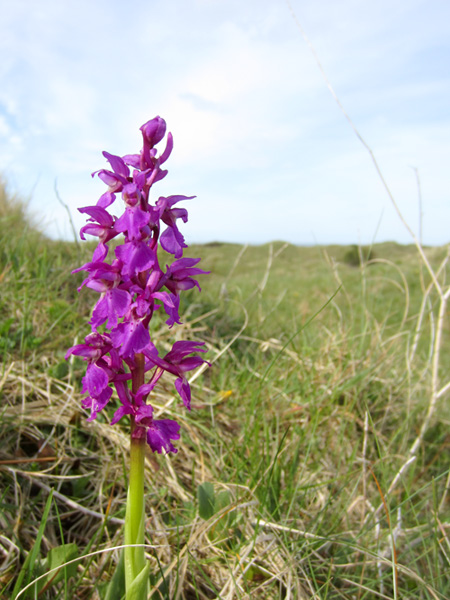
Early Purple Orchids


Over the Bank Holiday weekend, I visited my father in South Wales. He is fortunate to live overlooking the delightful Kenfig NNR and, although birding can be tough at times here, it sure is a great place to see orchids. With next to nothing exciting around bird-wise, I spent plenty of time photographing Early Purple Orchids. I also saw Green-winged Orchid although, at the time, did not realise it was a different species(!) and didn't bother photographing them.

Friday, 13 April 2012

Thayer's Gull, 11th April

While away in Egypt, I received a message concerning a reported Thayer's Gull in North Lincs. My immediate reaction (not knowing anything more than it being reported as a possible) was not favourable. However, once excited texts started to flood in, we knew it must be a bit more serious than we had initially given credit for. Sure enough, after landing at Gatwick, I had a look at the pics on my phone - shit! And it had apparently gone!

Anyway, its reappearance on Tuesday prompted me to head down on Wednesday morning. I was pretty keen to see the bird following the Fermanagh gull I found in January (though I won't take claim for diagnosing it as thayeri!). Today's was a much more convincing beast, being at the dark end of the spectrum. I still feel there are issues with the Fermanagh bird's rather hoary upperparts (among other things), which make a confident diagnosis as thayeri very difficult even if it does look a good candidate.

Pretty much every other birding blogger has preached from the "as good a candidate as you can get" hymnsheet, so I shan't bother. Scope views were good, although the heat haze was terrible hence not ideal for photos. I'll let my terrible attempts do the talking.


On the way back, I managed to crash my car. So, it cost a little more than the £50 tank of fuel in the end but, fortunately, I still have my health.

Wednesday, 11 April 2012

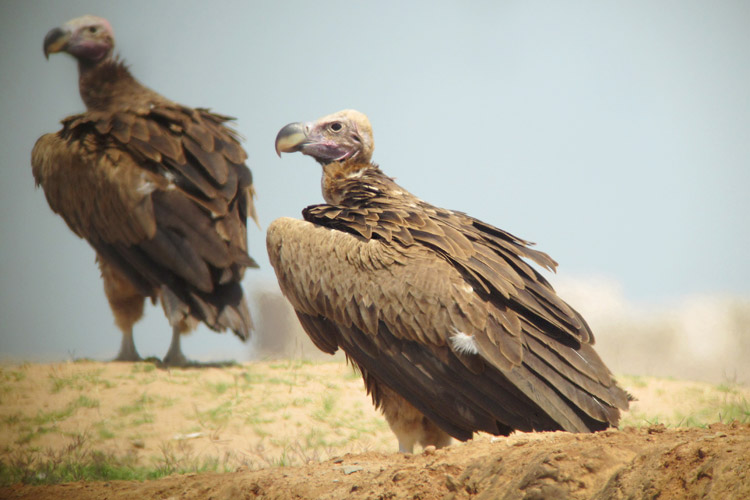
Lappet-faced Vultures


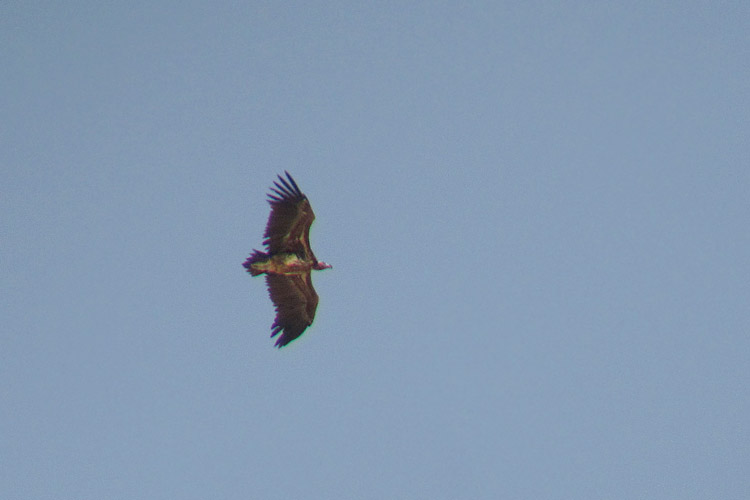
One of the highlights of the trip was making it south to Shalatein to see the Lappet-faced Vultures which reside around the town thanks to the large camel market. With a lack of fuel in our hire car, we had to get a local to take us down - Rich stayed at Lahami, but Staines and I took the risk. The jeep was ancient, and broke down twice by the time we reached Shalatein, thus rendering us stuck there until an emergency car was eventually organized to take us back north. Our first views of the birds were largely distant and in flight, but I managed some digi-binned/scoped shots:


Once our car finally arrived, we were quickly whisked around to the north side of the town where two birds were showing at point blank range by the road. They're incredibly tame, as the photo at the top of this post shows!


Shalatein is a hell hole. Lots of Sudanese refugees, dead camels, bad smells and rubbish. But the vultures are worth it...

The Red Sea "Riviera"

A few shots from along the Red Sea coast in the few days we spent there; some are digi-binned hence slightly dodgy quality!


Caspian Tern, Wadi Lahami- present in small numbers offshore


Adult Brown Booby, off Wadi Lahami - seen 5th and 6th


Osprey, Wadi Lahami - common breeder in the mangroves with passage birds going through


Redshank, Wadi Lahami - up to 12 present, they don't look like 'Western' birds - long-billed, very pale on the underside


Isabelline Wheatear - small numbers present in hotel gardens at Lahami Bay and Shams Alam


Eastern Stonechat - three females and a male seen at Lahami Bay Resort - male an obvious Caspian Stonechat (prob armenicus); females more difficult but presumably armenicus too


Red-throated Pipits - perhaps the commonest migrants right along the coast, along with Yellow Wagtails and Tree Pipits


A Collared Pratincole rests by the swimming pool at Lahami Bay Resort on 6th


African Collared Dove, Wadi Gimal - two seen here on 7th

Migrating Raptors

During the trip, we tried on spec for migrating raptors a couple of times. The first of these was during the morning of 4th, in the hills some 17km west of Marsa Alam on the road to Edfu. Brought to a standstill by a number of very close Steppe Eagles either sat on the ridges or in acacias, we decided to spend a couple of hours in the area to see what went through.


Adult EV and immature (2cy?) Steppe Eagle

At least 200 Steppe Eagles (and smaller numbers of Black Kites and Brown-necked Ravens) appeared to be loafing on the ridges around a nearby beduoin settlement, presumably attracted to waste. In addition, a number of 'kettles' of raptors drifted through - predominately Steppe Buzzards (in to the 1,000s), but also plenty of Black Kites, Steppe Eagles, and smaller numbers of Booted and Short-toed Eagles, Egyptian Vultures, Black Storks, 4 Cranes and a Long-legged Buzzard. Not bad for a spontaneous stop!

Our second crack of the whip came at El Gouna on the 8th. A juicy-looking ridge a few km inland of the golf course complex revealed plenty of Steppe Buzzards and Black Kites getting up and following it northwards. Between 08:45 and 09:45, we had plenty of the above plus at least three Levant Sparrowhawks (a tick for Rich!), a 3cy Eastern Imperial Eagle (tick for me!), Booted, Short-toed and Steppe Eagles, 18 Black Storks and a few Sparrowhawks.


Steppe Buzzard cloud

The Nile Valley

Following our arrival in Hurghada, we undertook a pretty horrendous drive southwest to Aswan. The following day (2nd) was spent concentrating on Tut Amon village, where we eventually connected with a pair of Three-banded Plovers on an island along the margins of Lake Nasser - a nervous search of the fishponds had drawn a blank, although my first Senegal Thick-knees, Clamorous Reed Warblers and aegypticus Black Kites were seen here along with other nice bits such as Temminck's Stint, Purple & Night Herons, Spur-winged Lapwings, Pied Kingfishers, Bluethroat and so on.

A lazy afternoon followed, with quite a bit of sleeping before we enjoyed a 90-minute cruise down the River Nile, courtesy of our ultra-helpful tour guide Yasser (can't recommend him enough for sorting out Nile Valley bits inc. Abu Simbel, please get in touch for his contact details). Here we enjoyed our best views of Nile Valley Sunbirds, Striated Herons, Purple Gallinules, Little Green Bee-eaters, Clamorous Reeds and plenty of other herons, terns and the odd gull.


Digi-binned Clamorous along the Nile

Following morning saw us in the early "convoy" down to Abu Simbel, where we arrived at around 08:00. The African Mourning Doves proved pretty easy to track down (mainly via the call), although stayed in the thickest vegetation and didn't porn it as Legrand/Monticelli's photographs might suggest. A few migrants included Masked Shrikes.


Definitely a case of 'Mourning Glory' for Rich B, this bird propelled him to no.1 in the WP

The Abu Simbel boat trip took in 'Airport Bay' and a few other bays to the north. It wasn't cheap, and we didn't see Pink-backed Pelican nor African Skimmer, but three Yellow-billed Storks showed well as did several African Pied Wagtails. A male Kittlitz's Plover was seen on one of the offshore islands, although not well, and a flock of 18 or so Black-winged Pratincoles delighted us among the more expected waders, terns and gulls. For views, a boat trip out can't be recommended highly enough - well worth it, would be great in summer if all the specialities are there.


Digibinned Abu Simbel specialities

Back in the village, we gorged on seconds of the Mourning Doves and were also charmed by a family of Rock Martins.